Acropolis
Standing atop the Acropolis while overlooking the city of Athens is one of the most unforgettable experiences in Greece. For thousands of years, the Acropolis has stood above Athens as a symbol of ancient civilization, philosophy, democracy, and human achievement.
Today, the Acropolis remains the most iconic landmark in Greece and one of the most important archaeological sites in the world.
For travelers visiting Athens, the Acropolis offers far more than ancient ruins. It provides a powerful connection to classical Greek history, architecture, mythology, and the cultural foundations that shaped much of Western civilization.
For Christian travelers exploring Biblical Greece, the Acropolis area also carries special significance because of the Apostle Paul’s visit to Athens described in Acts 17.
Whether visiting Greece for history, faith, culture, or archaeology, the Acropolis is considered one of the essential experiences in Athens.
What Is the Acropolis?
The Acropolis is an ancient fortified hill located in the center of Athens. The word “Acropolis” means “high city” in Greek, and while several ancient Greek cities had their own acropolis, the Acropolis of Athens became the most famous and historically significant of them all. The hill rises approximately 490 feet above sea level and overlooks the modern city of Athens.
Built primarily during the 5th century BC during the Golden Age of Athens, the Acropolis became the religious, political, and cultural center of ancient Athens.
The site includes several world-famous monuments, including:
- The Parthenon
- Erechtheion
- Temple of Athena Nike
- Propylaea
- Theater of Dionysus
- Ancient sanctuaries and temples
For many travelers, seeing the Acropolis in person becomes one of the defining moments of their Greece journey.
Where Is the Acropolis Located?
The Acropolis is located in central Athens and can be seen from many parts of the city.
The archaeological complex rises above several famous Athens neighborhoods and attractions, including:
- Plaka
- Monastiraki
- Ancient Agora
- Mars Hill (Areopagus)
- Acropolis Museum
Because of its elevated position, the Acropolis offers breathtaking panoramic views of Athens, stretching toward the Aegean Sea on clear days.
The site is easily accessible from central Athens hotels and is included on many professionally organized Biblical Greece tours and Athens sightseeing itineraries.
Why Is the Acropolis So Famous?
The Acropolis is famous because it represents the height of ancient Greek civilization and classical architecture.
The monuments built on the Acropolis influenced:
- Architecture
- Philosophy
- Art
- Politics
- Democracy
- Western civilization
for centuries across the world.
The Acropolis survived invasions, wars, earthquakes, religious transformations, and centuries of change. Various structures on the hill served as pagan temples, churches, mosques, and military fortifications throughout history.
Today, the Acropolis is recognized as a UNESCO World Heritage Site and remains one of the most important archaeological treasures in the world.
The Parthenon – The Crown Jewel of the Acropolis
The most famous structure on the Acropolis is the Parthenon, the massive temple dedicated to Athena, the patron goddess of Athens.
Built between 447 and 432 BC, the Parthenon is considered one of the greatest masterpieces of classical Greek architecture ever constructed.
Made primarily from Pentelic marble, the temple continues to impress visitors with its:
- Massive columns
- Architectural precision
- Symmetry
- Historical importance
- Incredible engineering
Even after thousands of years and significant historical damage, the Parthenon remains one of the most recognizable landmarks in the world.
The Biblical Significance of the Acropolis Area
Although the Acropolis itself is not directly mentioned in the Bible, the surrounding Athens area holds tremendous Biblical significance.
According to Acts 17, the Apostle Paul visited Athens during his missionary journeys. While in Athens, Paul preached at Mars Hill, also known as the Areopagus, located directly below the Acropolis.
From this location, Paul delivered his famous sermon concerning the “Unknown God.”
Standing near the Acropolis today helps many Christian travelers better understand the environment Paul encountered while preaching in ancient Athens.
Many visitors exploring Athens combine:
- The Acropolis
- Mars Hill (Areopagus)
- Ancient Agora
- The Parthenon
- Sites connected to the ministry of Apostle Paul
These locations are frequently included on Footsteps of the Apostle Paul tours and Biblical Greece itineraries.
What to See on the Acropolis
The Acropolis includes several important monuments and archaeological structures beyond the Parthenon.
Erechtheion
Known for its famous Caryatid statues, the Erechtheion was dedicated to both Athena and Poseidon and remains one of the most unique structures on the Acropolis.
Temple of Athena Nike
This elegant temple near the entrance of the Acropolis honored Athena as the goddess of victory.
Propylaea
The monumental gateway serving as the grand entrance to the Acropolis complex.
Theater of Dionysus
Located on the southern slope of the Acropolis, this ancient theater is considered one of the earliest theaters in the world and played an important role in ancient Greek drama.
Acropolis Museum
Located below the hill, the Acropolis Museum contains sculptures, artifacts, and original architectural elements from the Acropolis structures.
Many visitors are surprised by how much more meaningful the Acropolis experience becomes after visiting the museum and understanding the historical background behind the monuments.
What to Expect When Visiting the Acropolis
Visiting the Acropolis typically involves a moderate uphill walk and uneven marble surfaces.
During summer, Athens temperatures can become extremely hot, especially during midday. Early morning visits are usually more comfortable and also provide the best lighting conditions for photography across the Acropolis.
Travelers should expect:
- Security checkpoints
- Crowds during peak season
- Moderate walking
- Slippery marble pathways in some areas
- Large open areas with limited shade
Comfortable walking shoes and water are strongly recommended.
Most travelers spend approximately 2–4 hours exploring the Acropolis and nearby archaeological sites.
Because of the immense historical and Biblical significance of the area, many visitors prefer exploring the site with a licensed guide who can explain the architecture, mythology, history, and New Testament connections.
Travel Tip for Visiting the Acropolis
Travel Tip: Many experienced travelers and organized tour groups prefer visiting the Acropolis early in the morning before temperatures become too hot and crowds increase throughout the day.
Many visitors also combine the Acropolis with:
- Mars Hill
- Ancient Agora
- Plaka
- Monastiraki
during the same morning for a more complete Athens experience.
If possible, plan extra time for the Acropolis Museum, which adds tremendous historical context to the visit.
Best Time to Visit the Acropolis
The best times to visit the Acropolis are generally:
- Spring (March–May)
- Fall (September–November)
These seasons offer more pleasant temperatures and fewer crowds compared to peak summer months.
Experienced travelers and organized tour groups often prefer:
- Early morning visits
- Late afternoon visits
- Sunset hours for photography
Summer afternoons in Athens can become extremely hot, especially during July and August.
Guided Tours vs Visiting Independently
Some travelers choose to visit the Acropolis independently, while others prefer joining a guided tour.
A knowledgeable guide can help visitors better understand:
- Ancient Greek history
- Architecture
- Mythology
- Biblical connections
- The significance of Athens during the time of Apostle Paul
For Christian travelers exploring Greece, guided Biblical tours often provide a much deeper and more meaningful experience by connecting the Acropolis and Athens to the New Testament.
Many organized Greece itineraries combine Athens with:
- Ancient Corinth
- Philippi
- Meteora
- Thessaloniki
- Patmos
- Other important Biblical destinations in Greece
Helpful Tips for Visiting the Acropolis
Before visiting the Acropolis, keep these helpful tips in mind:
- Wear comfortable walking shoes
- Bring water during warmer months
- Arrive early to avoid large crowds
- Purchase tickets in advance when possible
- Bring sun protection during summer
- Visit the Acropolis Museum afterward
- Allow extra time to explore nearby Plaka and Monastiraki
- Consider joining a guided tour for a richer experience
- Carry a camera or phone with extra battery for photography
Frequently Asked Questions About the Acropolis
What is the Acropolis?
The Acropolis is an ancient citadel and archaeological complex located on a hill above Athens, Greece.
Is the Parthenon part of the Acropolis?
Yes. The Parthenon is the most famous structure located on the Acropolis.
How long does it take to visit the Acropolis?
Most travelers spend between 2 and 4 hours exploring the Acropolis and surrounding archaeological areas.
Is the Acropolis worth visiting?
Absolutely. The Acropolis is considered one of the most important historical landmarks in the world and one of the top attractions in Greece.
What is the Biblical significance of Athens?
Athens is important in the Bible because the Apostle Paul preached there during his missionary journeys, including his famous sermon at Mars Hill in Acts 17.
Did Apostle Paul visit the Acropolis?
The Bible specifically mentions Paul preaching at the Areopagus (Mars Hill), located directly below the Acropolis near the Parthenon.
What should I wear to visit the Acropolis?
Comfortable walking shoes are highly recommended because of uneven pathways and marble surfaces.
What is the best time to visit the Acropolis?
Early morning and late afternoon visits are generally considered the most comfortable and scenic times to explore the site.


Visit the Acropolis on your Tour to Greece
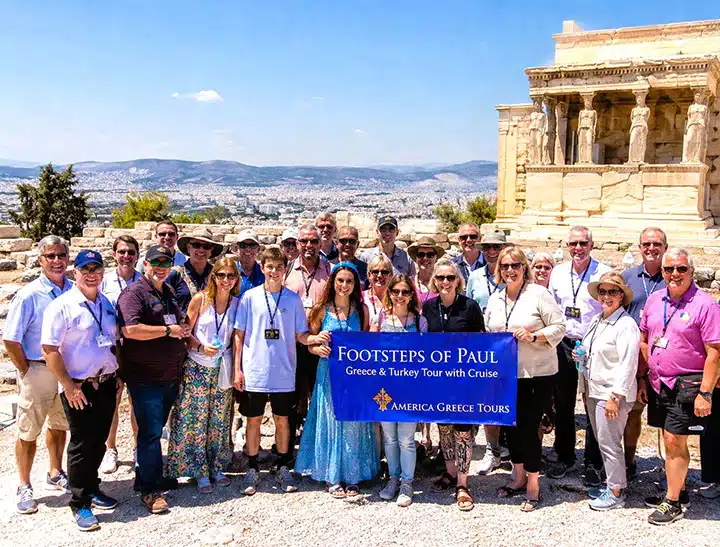
Footsteps of the Apostles Tour in Greece & Turkey with 4 Night Greek Island Cruise
11 Nights / 13 Days | Christian Greece Tour, including 4-Night Cruise & Northern Greece
From
Regular price
$5,840 |
Discount price
$4,995
Join our most popular Christian tour to Greece, where you’ll walk in the footsteps of the Apostle Paul, exploring the very cities and regions he visited during his missionary travels.
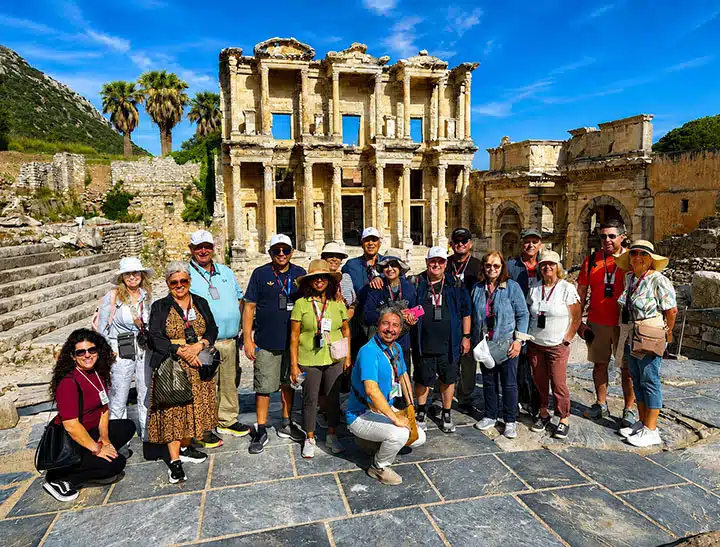
Churches of Revelation-Turkey & Greece with 3 night Greek Island Cruise
8 Nights / 10 Days | Turkey & Greece Journey, including 3-Night Cruise
From
Regular price
$4,695 |
Discount price
$3,945
Walk in the footsteps of Apostle Paul and John on a unique journey through the Seven Churches of Revelation, Patmos and Athens – an experience you won’t want to miss.

Footsteps of Paul Tour in Greece / Optional 3-Night Greek Island Cruise
7 Nights / 9 Days | Christian Tour to Greece
From
Regular price
$3,495 |
Discount price
$2,745
Join our popular Christian tour to Greece, where you will walk in footsteps of the Apostle Paul. Explore the region’s rich biblical history, visit sacred sites, and deepen your faith while enjoying the beauty of this ancient lands.