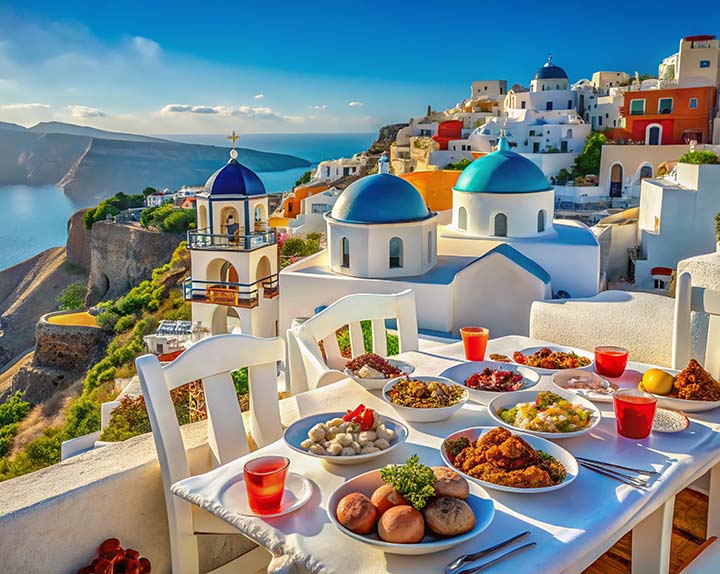
Walking the Ancient Paths: The Most Important Biblical Sites in Greece
Greece occupies a unique place in the story of early Christianity. It was here, amid Roman roads, Greek philosophy, busy harbors, and pagan temples, that the Gospel first took root in Europe. Paul’s missionary journeys across Macedonia and Achaia, along with John’s exile on Patmos, shaped the theology, language, and direction of the early Church. What makes Greece especially meaningful for modern readers of Scripture is continuity. Many of the places named in Acts and the Epistles are still identifiable today. The same hills, ports, and city centers remain, allowing visitors to trace the New Testament narrative with remarkable clarity. Our short guide presents the most important biblical sites in Greece, carefully organized between mainland and island locations, and grounded in the biblical text and historical record.
What are the most important biblical sites in Greece?
The most significant New Testament sites in Greece fall into two main groups: mainland cities and Aegean islands. On the mainland, places such as Philippi Thessaloniki, Berea, Athens, and Corinth were central to the missionary journeys of the Apostle Paul and the establishment of the earliest European churches. In the Greek islands, locations including Patmos and Crete played key roles in later New Testament history, most notably John’s reception of the Revelation on Patmos and Paul’s dramatic voyage described in the Book of Acts.
Mainland Biblical Sites in Greece
Philippi-The First Christian Church in Europe (Acts 16)
Biblical reference: Acts 16:6–40
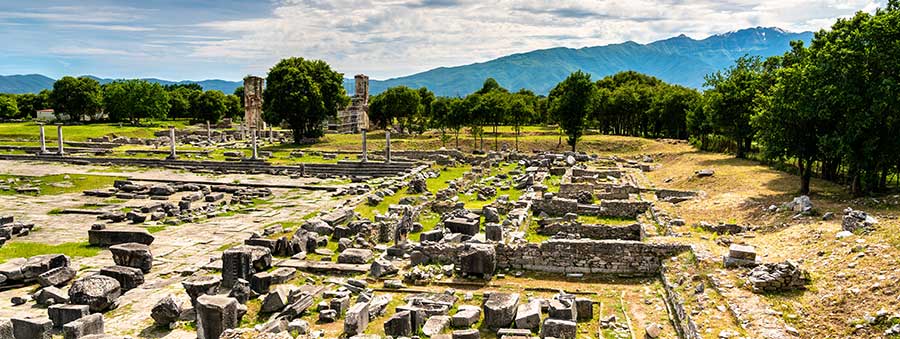
Philippi marks a decisive turning point in Christian history: the Gospel’s first recorded arrival in Europe. After receiving a night vision of a Macedonian man pleading, “Come over to Macedonia and help us” (Acts 16:9), Paul and his companions crossed the Aegean and traveled inland from Neapolis to Philippi. Outside the city gate, by a place of prayer near the river, Lydia – a merchant of purple cloth from Thyatira—believed and was baptized along with her household (Acts 16:14–15). She is the first named Christian convert on European soil. Soon after, Paul and Silas were imprisoned, only to be freed by a dramatic earthquake that led to the conversion of the Philippian jailer and his family (Acts 16:25–34). Today, visitors can walk through the Roman forum, view the remains of early Christian basilicas, and see the traditional site associated with Paul’s imprisonment, powerful reminders of a church born through faith, suffering, and joy.
Thessaloniki-A New Testament Church Forged Under Pressure
Biblical references: Acts 17:1–9; 1–2 Thessalonians
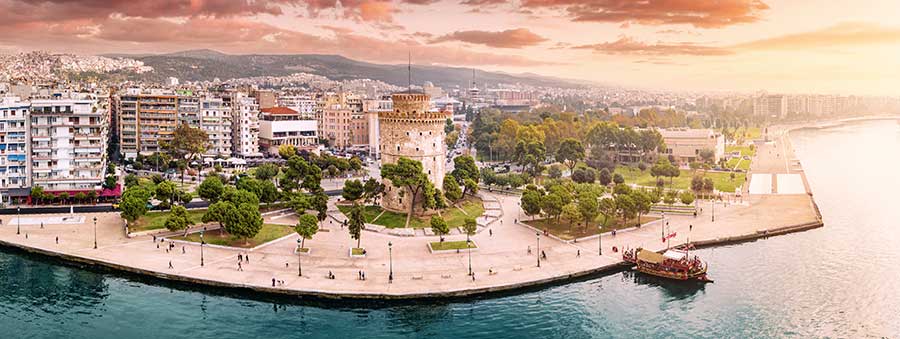
Paul traveled to Thessaloniki along the Via Egnatia, the major Roman highway linking the eastern and western empire. Though his ministry there was brief, it was fruitful. Some Jews, many God-fearing Greeks, and several prominent women believed the message of Christ (Acts 17:4). Opposition arose quickly, forcing Paul to leave the city. Yet the church endured, prompting Paul to write letters filled with pastoral warmth, encouragement, and eschatological hope. He praised them for turning “to God from idols to serve the living and true God” (1 Thessalonians 1:9). Modern Thessaloniki still bears a strong Christian identity, layered with Roman remains and Byzantine churches that testify to centuries of faith.
Berea (Veria)-Examining the Scriptures Daily (Acts 17)
Biblical reference: Acts 17:10–15
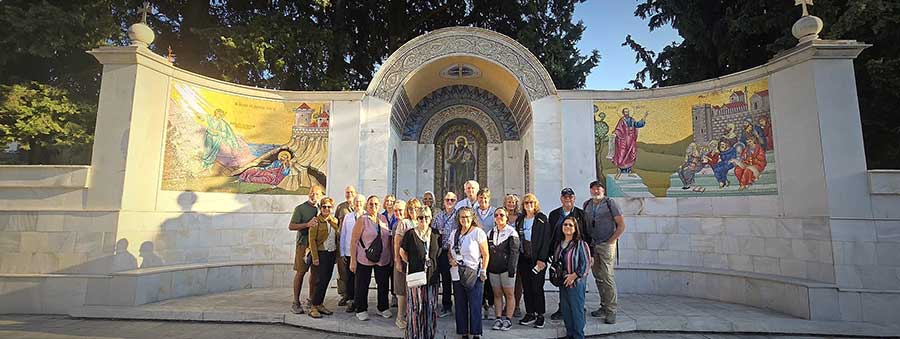
Berea is remembered not for dramatic miracles or major epistles, but for spiritual character. Luke records that the Bereans were “more noble-minded” because they examined the Scriptures daily to verify Paul’s teaching (Acts 17:11). This commendation has echoed through Christian history as a model of faithful discernment. A modern monument known as the Bema of the Apostle Paul marks the traditional location where he taught, honoring a community shaped by careful listening to God’s Word.
Athens and the Areopagus – Paul’s Sermon to the Greeks (Acts 17)
Biblical reference: Acts 17:16–34
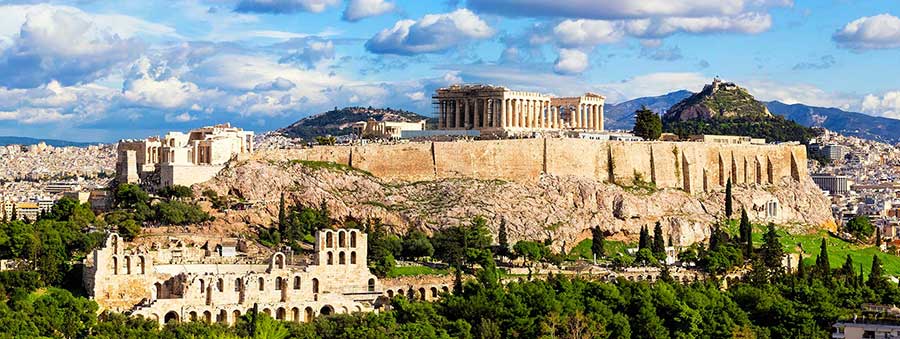
Athens confronted Paul with a culture saturated in philosophy and idolatry. Distressed by the many idols, he reasoned daily in the marketplace and was eventually invited to address the council of the Areopagus. There Paul proclaimed the “unknown God” as the Creator of heaven and earth, declaring that God now calls all people everywhere to repent, having given assurance through the resurrection of Jesus (Acts 17:24–31). While some mocked, others believed, including Dionysius the Areopagite. Standing today on Mars Hill, with the Acropolis above and the city below, visitors encounter one of the New Testament’s most intellectually profound and culturally sensitive sermons.
Corinth-A Major New Testament Church in Greece (Acts 18)
Biblical references: Acts 18; 1–2 Corinthians
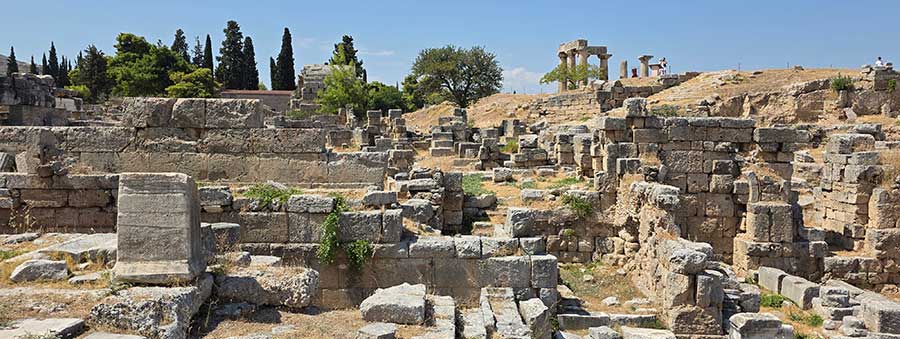
Corinth was a thriving Roman port city known for wealth, diversity, and moral challenges. Paul remained here for eighteen months, working alongside Aquila and Priscilla and establishing a deeply personal relationship with the church (Acts 18:1–11). He later stood before the proconsul Gallio at the city’s Bema, which still survives today. Paul’s letters to the Corinthians reveal a church struggling with division, immorality, and spiritual immaturity, yet also learning about love, resurrection hope, and the power of grace. Corinth remains one of the clearest windows into the real-life challenges of early Christian communities.
Apollonia-Along the Via Egnatia (Acts 17:1)
Biblical reference: Acts 17:1
Apollonia is briefly mentioned as one of the stops Paul passed through on the Via Egnatia between Amphipolis and Thessaloniki. Though Scripture records no ministry here, its inclusion confirms the historical accuracy of Paul’s route and the strategic infrastructure that carried the Gospel across Macedonia.
Nicopolis-Paul’s Intended Winter Base (Titus 3:12)
Biblical reference: Titus 3:12
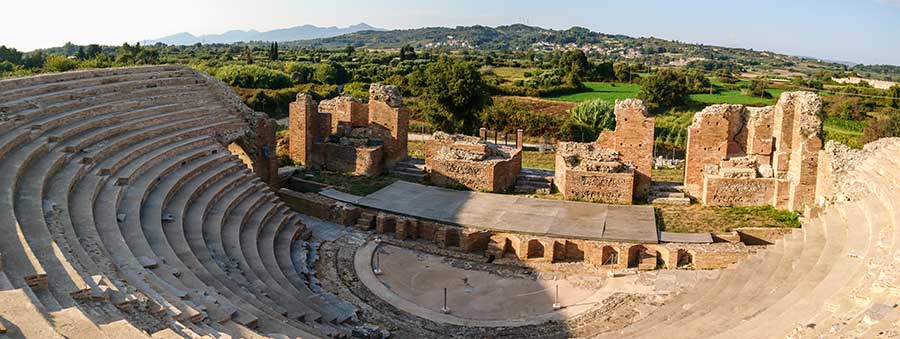
In his letter to Titus, Paul writes, “Make every effort to come to me at Nicopolis, for I have decided to spend the winter there.” Founded by Emperor Augustus, Nicopolis later became an important Christian center. Archaeological remains, including theaters, streets, and early basilicas, reflect the city’s prominence and its place in the expanding Christian world.
Biblical Sites in the Greek Islands
Patmos-The Island of Revelation (Revelation 1:9)
Biblical reference: Revelation 1:9
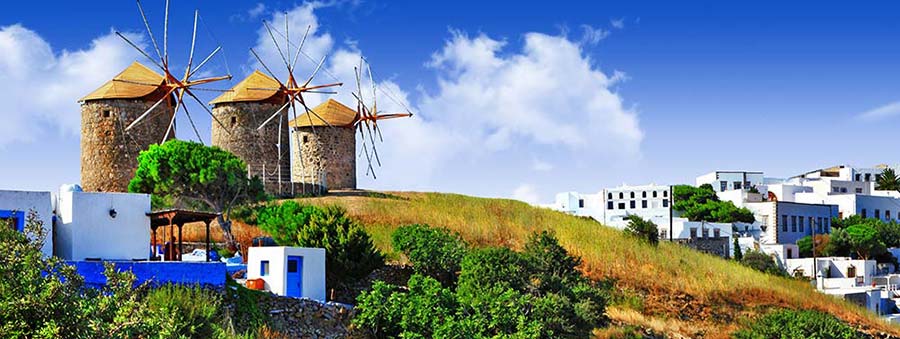
Patmos holds a singular place in Christian memory. The Apostle John writes that he was on the island “because of the word of God and the testimony of Jesus” when he received the visions recorded in Revelation.The Cave of the Apocalypse and the Monastery of Saint John mark Patmos as a place of exile transformed into divine revelation, a powerful reminder that God often speaks most clearly in isolation.
Rhodes-A Key Harbor on Paul’s Final Journey
Biblical reference: Acts 21:1
After leaving Cos, Paul’s ship sailed to Rhodes. While Scripture records no preaching here, the island helps establish the pace and direction of Paul’s journey before his arrest – underscoring Luke’s careful historical narration.
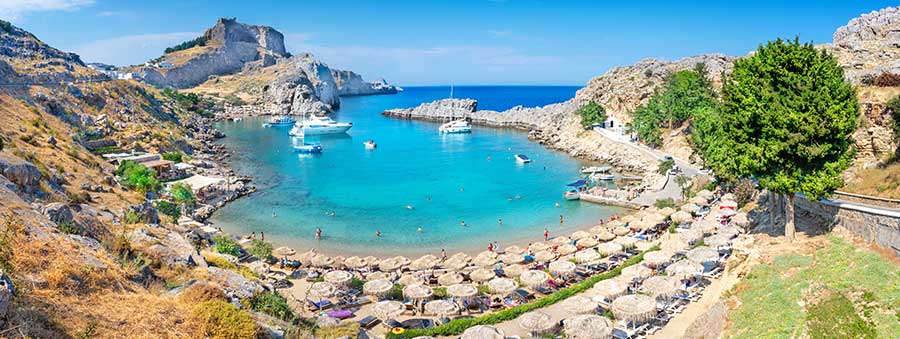
Crete (Fair Havens)-The Harbor Before the Storm (Acts 27)
Biblical references: Acts 27:8–12; Titus 1:5
Crete features prominently in Paul’s voyage to Rome. At Fair Havens on the island’s southern coast, Paul warned that continuing the journey would end in disaster. His counsel was ignored, leading directly to the violent storm and shipwreck described in Acts 27. Crete also later became a mission field entrusted to Titus, whom Paul instructed to “set in order what remains” among the churches (Titus 1:5).
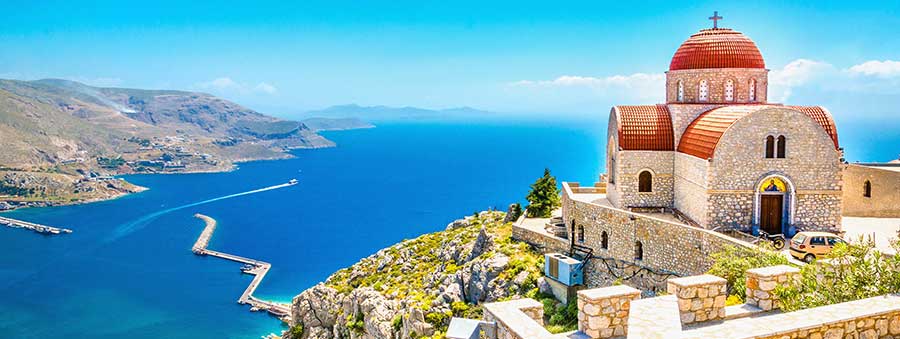
Samothrace-Paul’s First Stop in Europe (Acts 16:11)
Biblical reference: Acts 16:11
Samothrace appears briefly as the island where Paul’s ship anchored overnight after leaving Troas. Towering and rugged, it represents the Gospel’s first physical foothold in Europe, a silent witness to a moment that would change history.
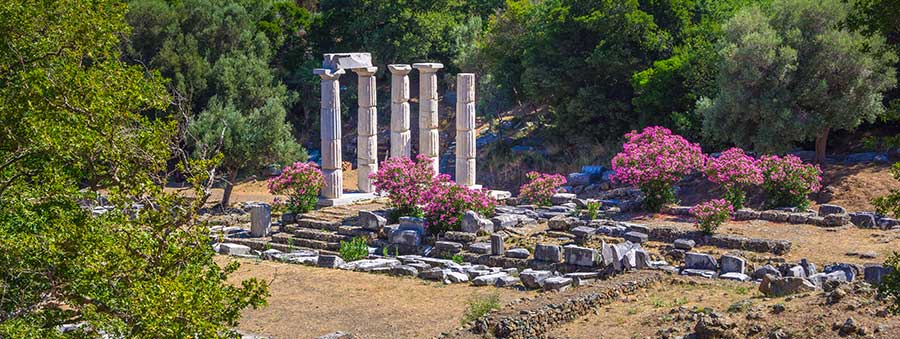
Samos-A Stop During Paul’s Third Missionary Journey
Biblical reference: Acts 20:15
During Paul’s third missionary journey, he sailed past Ephesus to avoid delay, stopping near Samos before reaching Miletus. Though only a brief mention, Samos is tied to Paul’s emotional farewell to the Ephesian elders that followed (Acts 20:17–38).

Cos (Kos)-A Maritime Waypoint on Paul’s Journey
Biblical reference: Acts 21:1
Cos appears as a stopping point on Paul’s final journey toward Jerusalem. Known in antiquity for its medical school, the island serves as another precise geographical marker in Luke’s detailed travel account.
Walking Where Scripture Unfolded
The biblical sites of Greece are not abstract locations; they are real places where faith was tested, truth was proclaimed, and communities were formed. Walking these ancient paths deepens the reading of Scripture, bringing the New Testament out of the page and into lived history.
Greece remains a living classroom of early Christianity, inviting modern believers to follow the footsteps of the apostles, listen again to their words, and rediscover the power of the Gospel as it first echoed across Europe. Tracing these sites brings the New Testament into sharp focus, revealing cities and islands where real people embraced the Gospel, faced hardship, and formed communities that produced the texts shaping Christian faith today. Whether you stand on the Areopagus, sit by Lydia’s baptismal stream, or look out over the Aegean from Patmos, Greece invites you to step directly into the story.