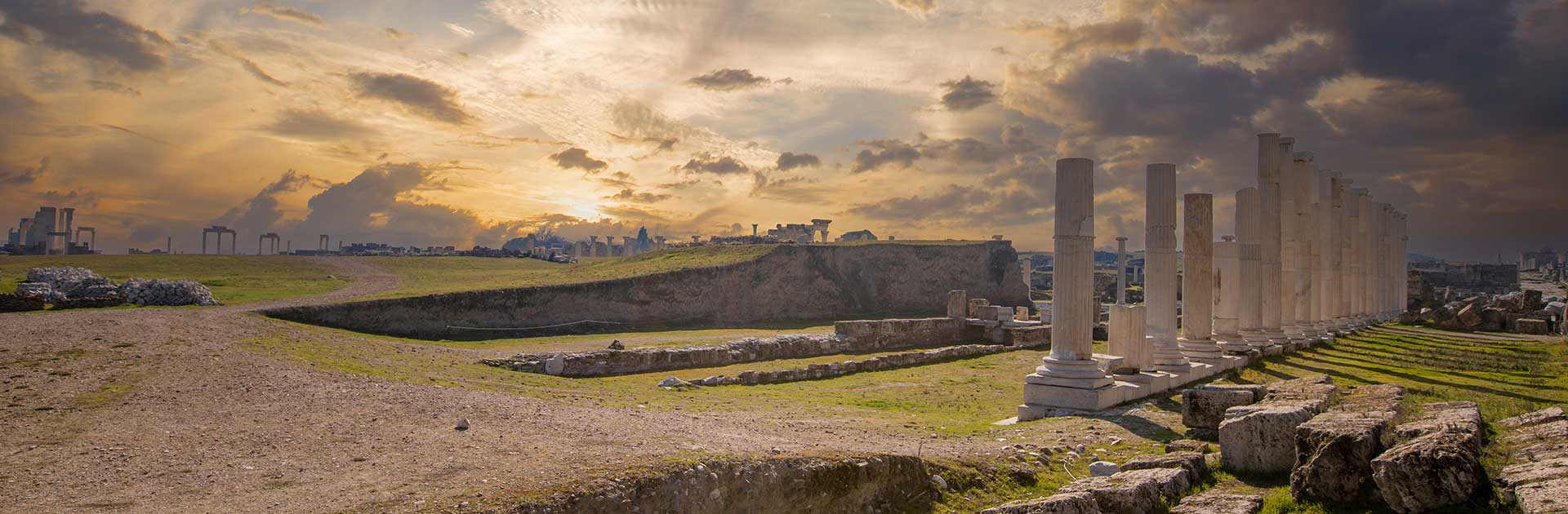
The Seven Churches of Revelation in Turkey: A Christian Traveler’s Guide
For many Christians, the Seven Churches of Revelation are familiar names from Scripture: Ephesus, Smyrna, Pergamum, Thyatira, Sardis, Philadelphia and Laodicea.
What is easy to forget is that these were not symbolic places or names from a distant story. They were real Christian communities in real cities, all located in what is now western Turkey.
And they can still be visited today. For travelers interested in biblical history, few journeys bring the Book of Revelation into clearer focus. Some of these cities contain extraordinary archaeological remains. Others now sit within busy modern towns. Together, they reveal the world in which the earliest Christian communities lived, worshiped, struggled and remained faithful. At America Greece Tours, we believe biblical travel becomes most meaningful when Scripture is connected with the geography where these events actually took place. The Seven Churches are a perfect example. Reading Revelation chapters 2 and 3 is powerful on its own. Reading those same passages while standing in the cities to which they were written creates an entirely different understanding of the text.
Where Are the Seven Churches of Revelation?
The Seven Churches were located in the Roman province of Asia, in an area that today forms part of western Turkey.
They are:
Ephesus – near modern Selçuk
Smyrna – modern Izmir
Pergamum – modern Bergama
Thyatira – modern Akhisar
Sardis – near modern Salihli
Philadelphia – modern Alaşehir
Laodicea – near modern Denizli
The cities were connected by important Roman roads and commercial routes. This made communication between the Christian communities possible and created a natural route through the region.
Today, travelers can follow much of that same geographical progression. One of the interesting things about visiting the Seven Churches is that no two sites feel exactly alike. Ephesus is vast and exceptionally preserved. Pergamum sits dramatically above the surrounding countryside. Smyrna is woven into the modern city of Izmir, while Thyatira and Philadelphia require more imagination because much less of their ancient fabric remains visible. That variety is part of the experience.
- Ephesus: Remember Your First Love
Scripture: Revelation 2:1–7
Related Scripture: Acts 18:19–21; Acts 19:1–41; Acts 20:17–38
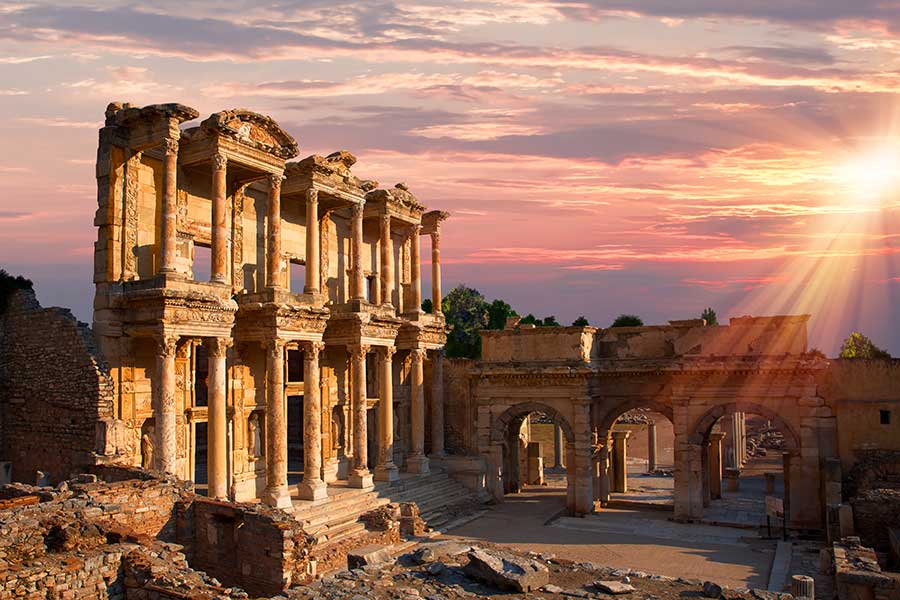
For many travelers, Ephesus is the most immediately impressive of the Seven Churches. It was one of the great cities of the Roman world and became one of the most important centers of early Christianity.
The Apostle Paul had a particularly strong connection with Ephesus. Acts records his ministry there, the dramatic reaction surrounding the worship of Artemis, and later his emotional farewell to the elders of the Ephesian church.
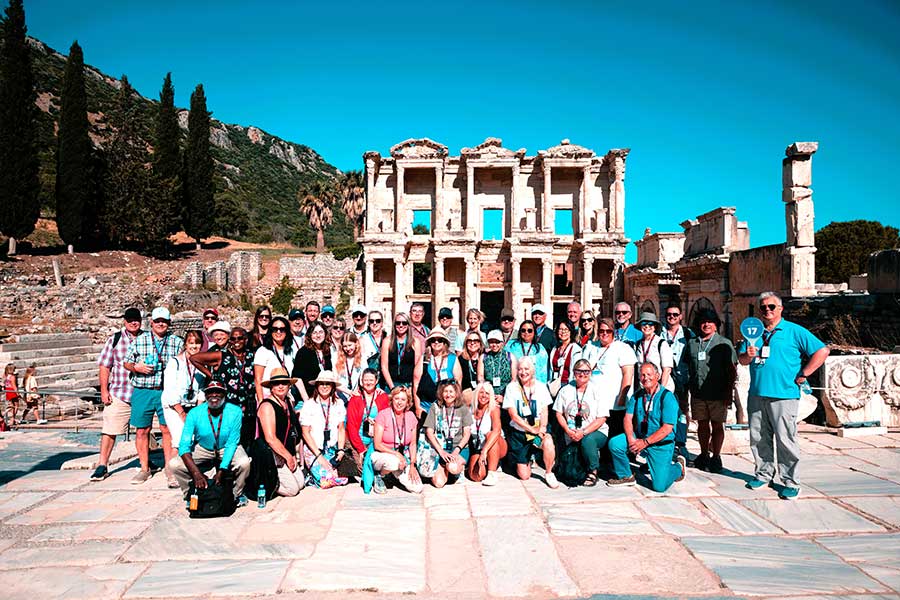
Walking through Ephesus today helps visitors appreciate the scale of the city in a way that a map or textbook simply cannot. Ancient marble streets stretch through the site, the Library of Celsus still commands attention, and the immense Great Theatre gives a sense of how large and influential the city once was.
This was not a quiet religious community on the edge of the Roman Empire. Ephesus was wealthy, cosmopolitan and filled with competing religious influences.
That setting gives the message in Revelation 2 greater context. The church is praised for its endurance and discernment, yet it receives a serious warning: it had left its first love.
One thing we encourage Christian travelers to do at Ephesus is to slow down for a moment and think beyond the ruins. Imagine the early believers living and working in this city, surrounded by enormous temples, commercial activity and Roman culture.
Then read Revelation 2.
The passage suddenly feels much closer.
- Smyrna: Faithfulness Through Suffering
Scripture: Revelation 2:8–11
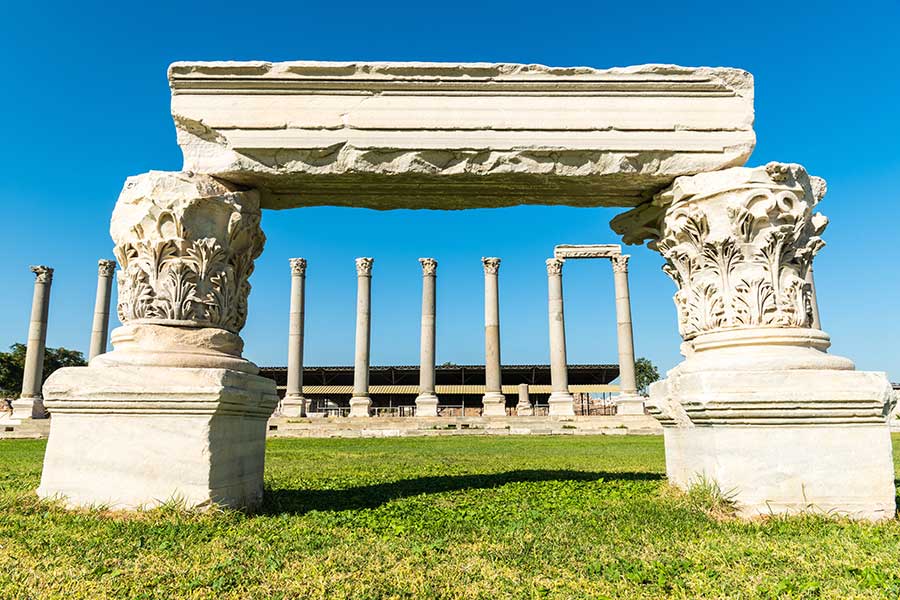
Ancient Smyrna is located within modern Izmir, one of Turkey’s largest cities. This makes the experience very different from Ephesus.
Rather than walking into a vast archaeological park, visitors find ancient remains surrounded by everyday modern life. Cars pass nearby, buildings rise around the site and the ancient city exists within a living contemporary city.
In Revelation, the church at Smyrna receives a message of encouragement during suffering and persecution. Unlike several of the other churches, Smyrna is not criticized. Instead, its believers are encouraged to remain faithful.
For Christian travelers, this can make Smyrna one of the more reflective stops on the journey. The surroundings also provide a useful reminder that the first Christians did not live apart from society. They lived in active cities, worked, raised families and practiced their faith under real social and political pressures.
When visiting Smyrna, it is worth remembering that faithfulness in Revelation is not presented as an abstract idea. It was being asked of real people living in a real city.
- Pergamum: Faith in a Center of Power
Scripture: Revelation 2:12–17
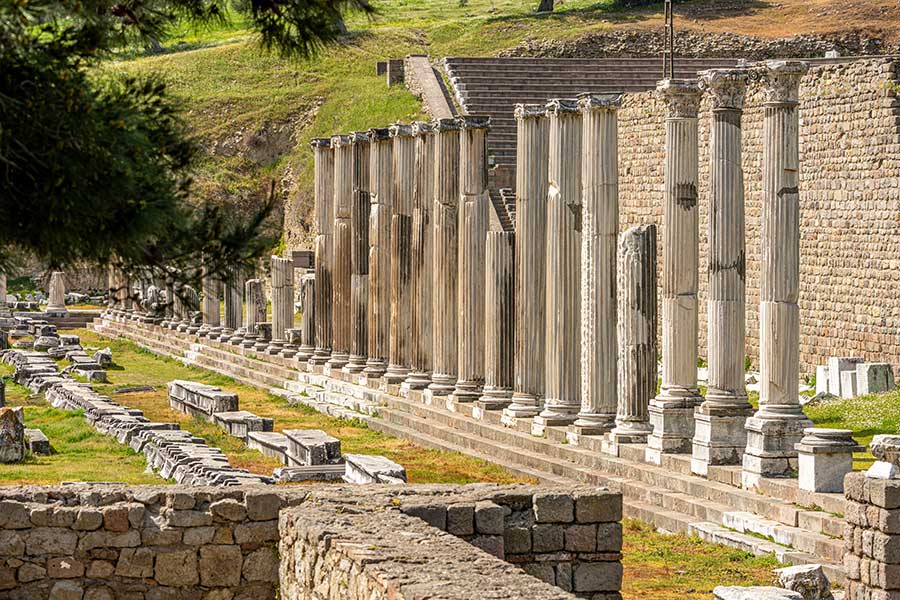
Pergamum may offer the most dramatic setting of all the Seven Churches.
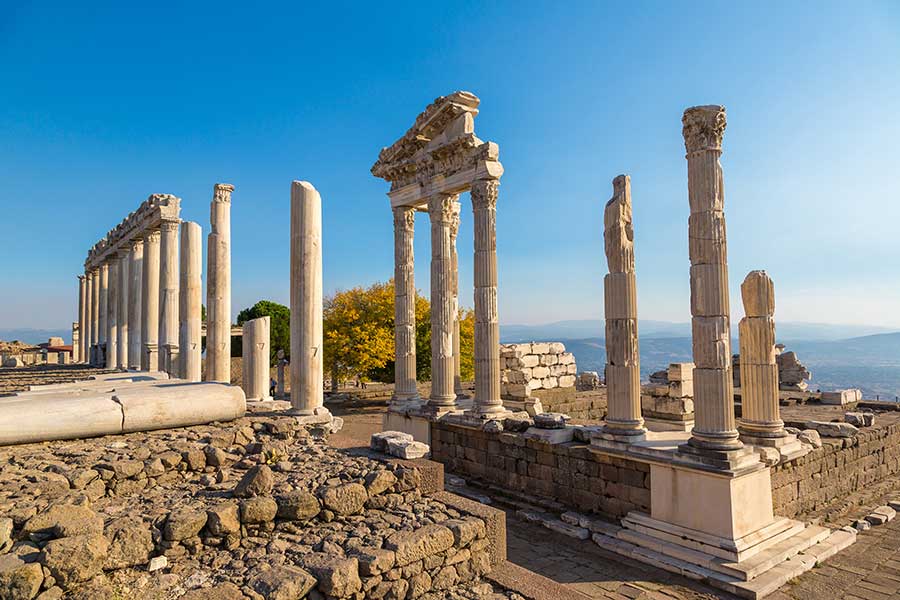
Ancient Pergamum rises high above the surrounding plain near modern Bergama. It was once a major political, religious and intellectual center, and its hilltop acropolis still gives visitors a sense of the city’s former importance.
The ancient site included monumental temples, a renowned library and a remarkably steep theater overlooking the valley below. Pergamum was also strongly associated with Roman imperial religion and other pagan cults.
That historical setting helps illuminate the message in Revelation 2. The Christian community lived in a city where political authority and religious worship were closely intertwined, yet the passage recognizes those who continued to hold firmly to their faith.
From the top of the acropolis, it is easy to understand how impressive Pergamum must have appeared in the ancient world.
For travelers following the Seven Churches route, this is one of the places where geography, archaeology and Scripture come together especially well. Reading Revelation here is not simply about learning another historical fact; the surroundings help explain the kind of environment in which the early Christian community was trying to remain faithful.
- Thyatira: Faith in Everyday Life
Scripture: Revelation 2:18–29
Related Scripture: Acts 16:14
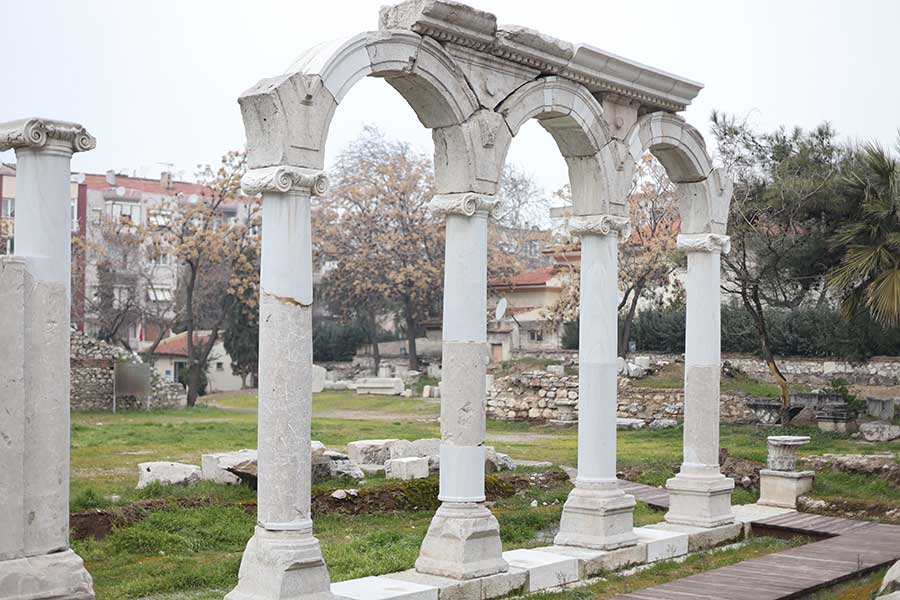
Thyatira is quite different from Pergamum or Ephesus. Much of the ancient city lies beneath modern Akhisar, so visitors will not find an enormous archaeological complex.
What remains, however, still provides an important connection to the biblical story.
Thyatira was known as a commercial center with numerous trades and guilds. Scripture also gives the city an especially interesting New Testament connection through Lydia. Acts 16 identifies her as a seller of purple cloth from Thyatira who met Paul in Philippi.
The message to Thyatira is the longest of the letters to the Seven Churches. The congregation is praised for its love, faith, service and perseverance, but it is also warned about teachings and practices that were leading members away from their faith.
When we think about Thyatira as a commercial city, the message becomes particularly interesting. Early Christians were not separated from daily economic life. They had to live out their faith while participating in the culture and business environment around them.
Thyatira may have fewer visible ruins than other stops, but it often encourages a different kind of reflection: what did it actually mean to live as a Christian in one of these ancient cities?
- Sardis: A Famous City With a Serious Warning
Scripture: Revelation 3:1–6
Sardis had a reputation long before Christianity reached the city.
It was once the capital of the powerful Lydian kingdom and became famous for wealth, power and its association with King Croesus. By the New Testament period, it remained an important city with a long and impressive history.
The message to the church at Sardis, however, is strikingly different from the city’s reputation.
The church is described as having a name for being alive but is warned that spiritually it has fallen asleep. It is told to wake up and strengthen what remains.
That contrast between reputation and reality is one reason Sardis can be such a memorable stop for Christian travelers.
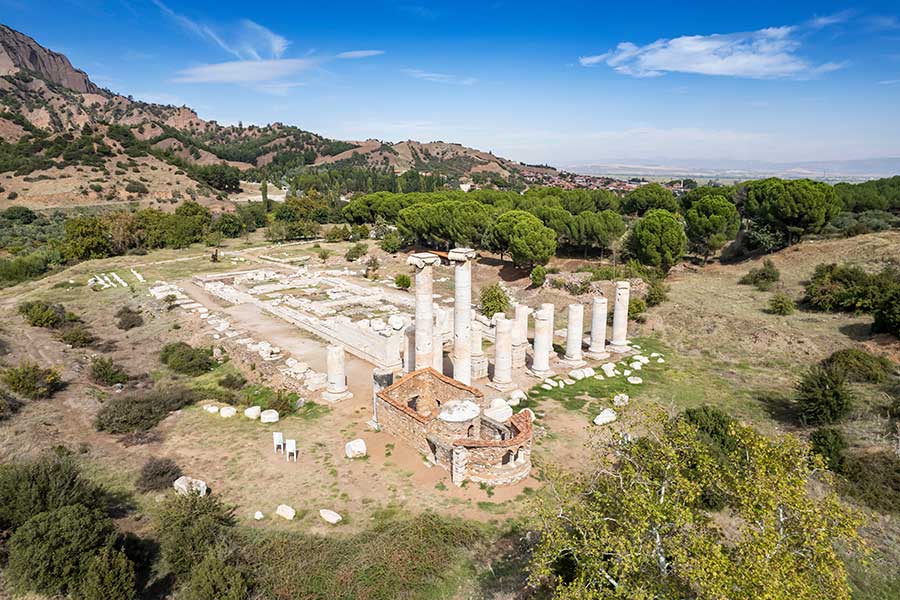
Today, the archaeological site includes substantial remains from different periods of the city’s history, including the Temple of Artemis, Roman structures and a significant ancient synagogue.
Standing among the ruins of a city once known throughout the ancient world for its prosperity provides a powerful setting for the message in Revelation 3.
It is also a reminder that one of the recurring themes throughout the Seven Churches is that outward appearance and spiritual condition are not always the same thing.
- Philadelphia: The Church of the Open Door
Scripture: Revelation 3:7–13
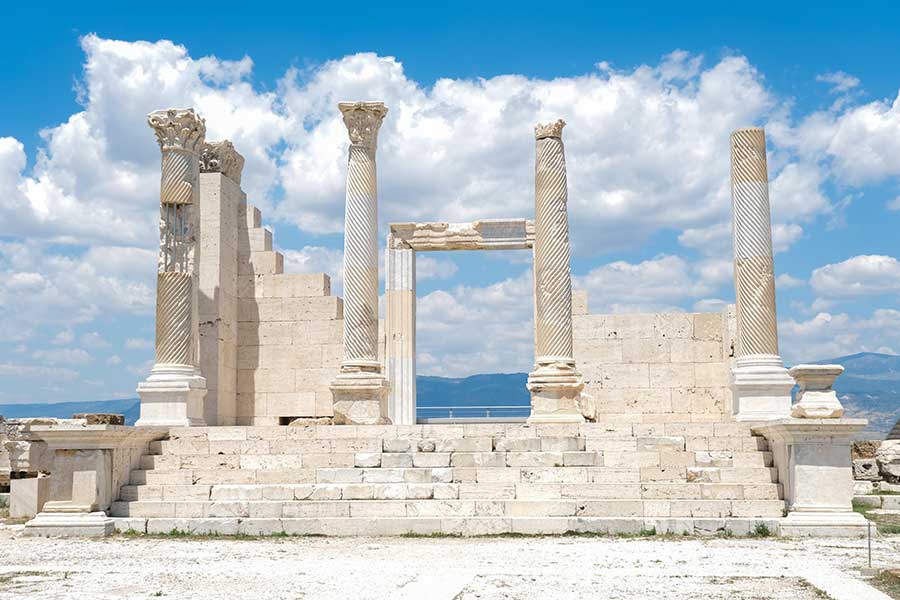
Ancient Philadelphia is located in the modern Turkish city of Alaşehir.
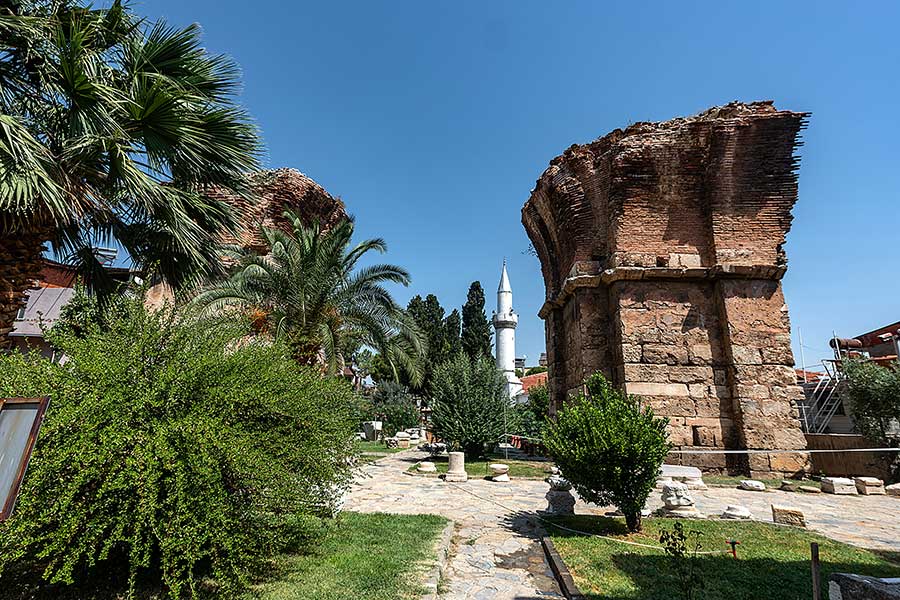
Compared with Ephesus, Pergamum or Sardis, much less survives from the ancient city. Yet its message in Revelation is one of the most encouraging among the Seven Churches.
The believers in Philadelphia are described as having little strength, yet they had remained faithful. The passage also includes the memorable image of an open door placed before them.
Today, visitors can see important Byzantine remains, including large surviving pillars that reflect the city’s later Christian history.
Philadelphia offers a useful reminder when traveling through biblical lands: the importance of a biblical site is not determined by how many ancient buildings still survive.
Sometimes a smaller site can encourage visitors to focus less on architecture and more on the Scripture associated with the place.
For Philadelphia, the message is about perseverance and faithfulness despite limited strength. That is one reason the church’s story continues to resonate with Christians today.
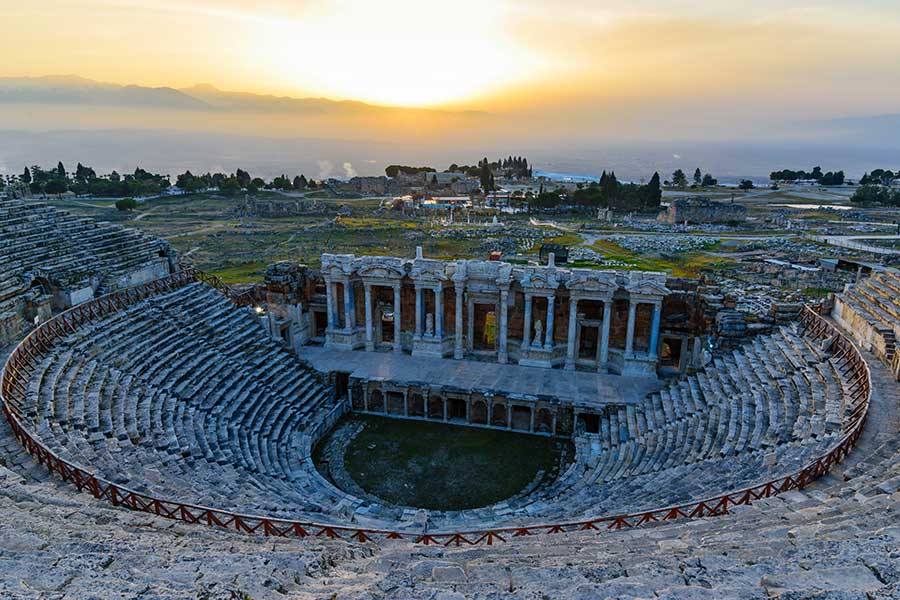
- Laodicea: The Lukewarm Church
Scripture: Revelation 3:14–22
The message to Laodicea may be the best known of all seven.
The church is described as neither hot nor cold, but lukewarm. The passage also addresses its confidence in wealth and self-sufficiency while challenging the community to recognize its true spiritual condition.
Understanding something about ancient Laodicea makes these words even more interesting.
The city was wealthy, strategically positioned and commercially important. It stood near other major ancient centers, including Hierapolis, and its prosperity was a defining part of its identity.
Today, Laodicea is an extensive archaeological site near Denizli. Ongoing excavation and restoration have revealed streets, public buildings, religious structures and significant remains from the city’s Christian period.
For many travelers, Laodicea is one of the clearest examples of why visiting biblical sites can deepen an understanding of Scripture. Knowing the character of the city helps explain why certain images and warnings would have been meaningful to the original congregation.
The location also allows travelers to visit nearby Hierapolis and Pamukkale, adding another fascinating dimension to this part of western Turkey.
These Were Churches, But Not Church Buildings
One question we often think is important to explain before a biblical journey is what the word “church” means in this context.
The Seven Churches of Revelation were not seven church buildings like the ones we might picture today. They were Christian congregations living within seven different cities.
That distinction changes the way you experience the sites.
Instead of arriving and looking for one particular building, you begin looking at the entire city as the setting of the biblical story. You see the marketplaces where people worked, theaters where crowds gathered, temples that dominated civic life and the roads people traveled.
The city itself becomes part of the lesson.
For travelers, this broader perspective can be one of the most valuable parts of visiting biblical sites. Scripture becomes connected not only to a particular ruin but to the everyday environment in which the first Christian communities lived.
What Makes Visiting the Seven Churches Different From Simply Reading About Them?
You do not need to travel to understand the message of Revelation. But travel can give those passages a sense of place.
When you stand in Ephesus, you appreciate just how important that city was. From the acropolis of Pergamum, you can see why the city projected such power. At Smyrna, you encounter ancient Christianity surrounded by a modern city. In Sardis and Laodicea, you see how wealth and civic importance formed part of the environment addressed in Revelation.
These details do not change Scripture. They provide context. That is what we hope travelers gain from a biblical journey: not simply photographs of famous archaeological sites, but a clearer picture of the world in which the biblical story unfolded.
Connecting the Seven Churches With Patmos
Scripture: Revelation 1:9–11
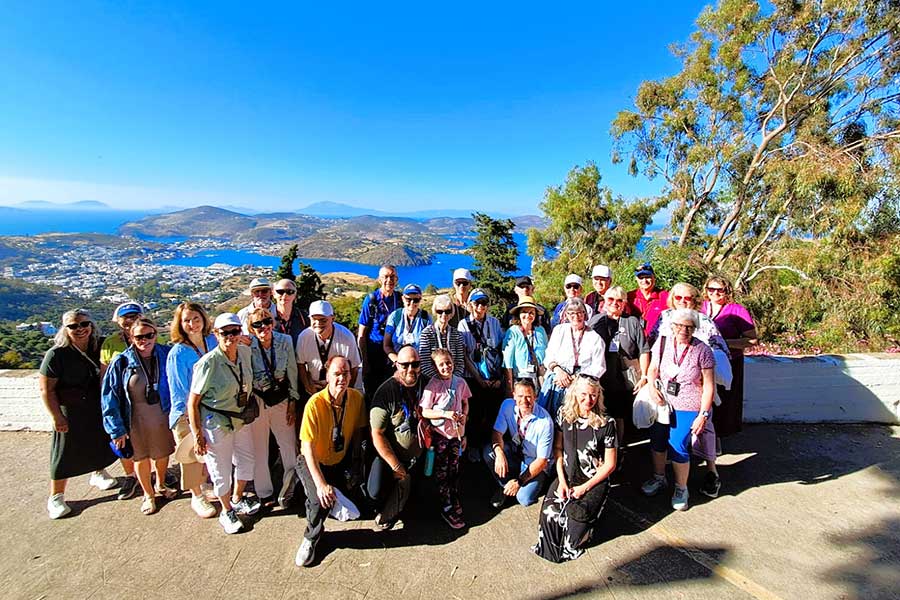
The Seven Churches are closely connected with another important biblical destination: the island of Patmos.
Revelation 1 tells us that John was on Patmos when he received the vision recorded in the Book of Revelation. He was instructed to write what he saw and send it to the seven churches in Asia.
That creates a remarkable geographical connection between Patmos and western Turkey.
For Christian travelers, visiting both adds another layer to the story. You can stand on the island associated with John and then continue into the cities to which the messages were addressed.
This is why combining Turkey and Patmos makes so much sense on a Revelation-focused journey.
Why Combine the Seven Churches With Greece?
The biblical story does not stop at the Turkish coast.
Across the Aegean Sea lies Greece, where many of the New Testament’s best-known events involving the Apostle Paul took place.
Athens, Corinth, Philippi, Thessaloniki and other locations help travelers follow another major chapter in the story of the early Church.
At America Greece Tours, our Churches of Revelation – Turkey & Greece journey is designed around this connection. The itinerary links the Seven Churches with Patmos and important sites in Greece, allowing travelers to explore the worlds of both the Apostle John and the Apostle Paul in one journey.
Rather than experiencing these places as unrelated archaeological sites, travelers can begin to see the geographical connection between the churches of Asia Minor, the island of Patmos and Paul’s ministry throughout Greece.
A Few Things to Know Before Visiting the Seven Churches
A Seven Churches journey is not a typical sightseeing tour.
Some sites are extensive and require a fair amount of walking, while others are smaller and can be explored more quickly. The terrain can vary considerably, especially at archaeological sites such as Pergamum and Ephesus.
Comfortable walking shoes are essential.
It is also helpful to bring a Bible or Bible app and read the appropriate passage either shortly before arriving or while at the site. Even a few minutes spent reading Revelation 2 or 3 in the actual location can make the visit more meaningful.
Most importantly, do not expect every stop to look like Ephesus. Each city has survived differently. The goal is not simply to see spectacular ruins but to understand the place, the community that once lived there and the message addressed to that church.
More Than an Archaeological Journey
The Seven Churches of Revelation are fascinating from an archaeological and historical perspective, but for Christian travelers their importance goes much deeper.
These were communities made up of real people.
They faced pressure. They experienced suffering. Some remained faithful. Others struggled with compromise or complacency. They received encouragement, correction and hope.
Nearly two thousand years later, Christians around the world are still reading the messages originally addressed to these seven communities.
That is what makes traveling through western Turkey so remarkable.
You are not simply walking through ruins.
You are walking through the cities behind the Scripture.
From the marble streets of Ephesus to the heights of Pergamum and the ancient remains of Sardis and Laodicea, each stop provides another piece of the world described in Revelation.
For travelers interested in biblical history, the early Church and the world of the New Testament, the Seven Churches of Revelation offer a journey unlike almost any other.
Experience the Seven Churches of Revelation
America Greece Tours offers Churches of Revelation – Turkey & Greece Journey that brings together the Seven Churches of Revelation, Patmos and important biblical sites in Greece.
The journey is designed for Christian travelers who want more than a traditional sightseeing tour. By combining Scripture, history, expert-guided touring and the places where the early Church actually developed, the itinerary offers a meaningful way to experience the world of Revelation and the New Testament. Explore our Churches of Revelation – Turkey & Greece Journey